Index of Reviews, Interviews & Discussions

Showing posts with label Solo_piano. Show all posts

Sunday, November 20, 2022

"Il Mio Morricone: A Tribute to a Friend" Marco Fumo — My friend Marco & his friend Ennio: Music is Love!

Il Mio Morricone: Tribute to a Friend
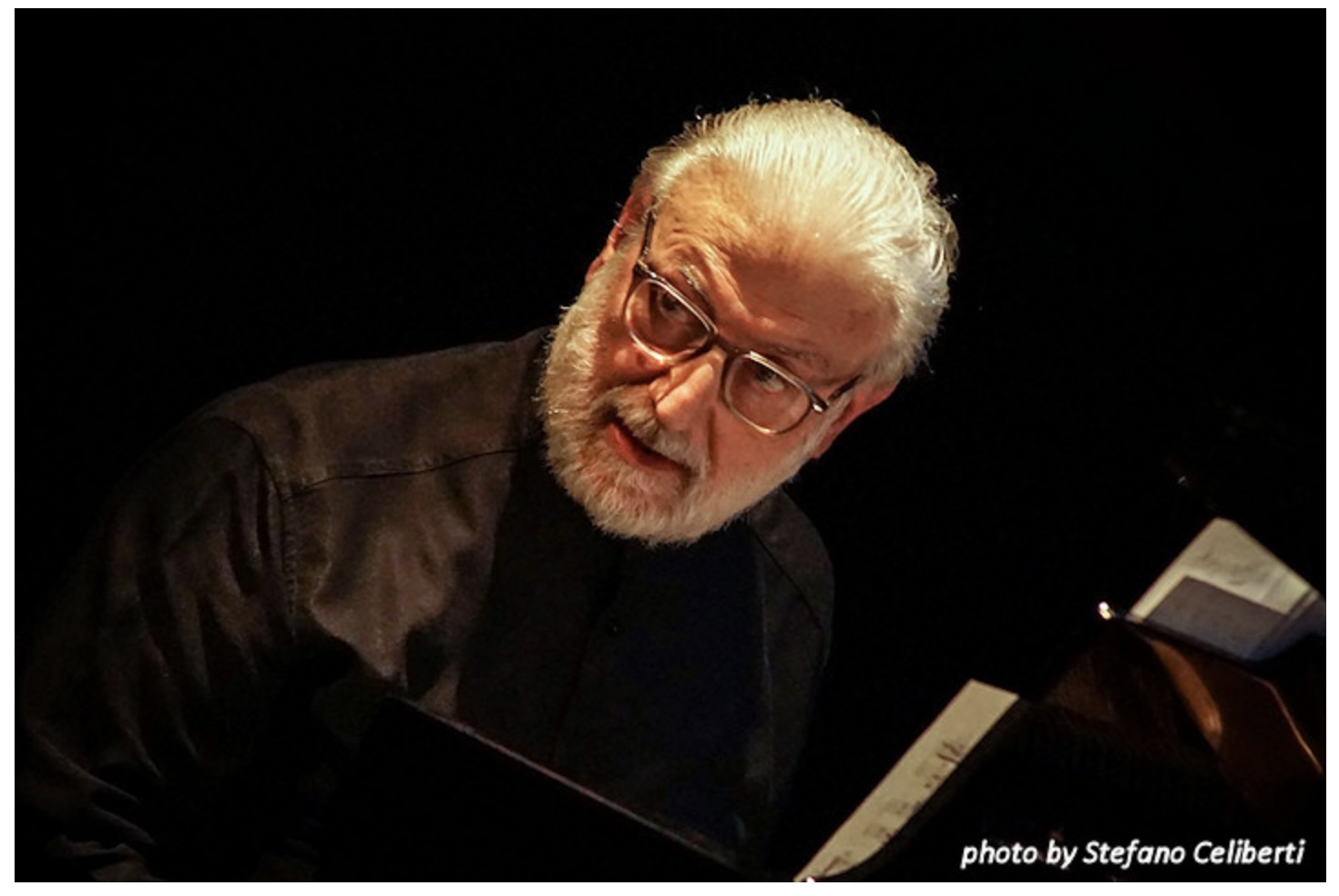
Marco Fumo, Solo Piano 

My Friend Marco & His Friend Ennio: Music is Love!

Music is an experience, not a science.
—Ennio Morricone

Imagine you buy this bootleg album on advice from an insider friend, and it is said to be the solo piano played by a great pianist of a never before performed manuscript of an Ennio Morricone score! You pay plenty for this gem! It will be the most precious album in your rare collection. Add to that, this performance happened at Ennio Morricone's home at his own piano by Ennio's friend Marco Fumo — who was heretofore known best for Classic Ragtime and of course some of Ennio's "experimental" compositions. Ennio's wife Maria was there and she served sandwiches, and his son Andrea — later a composer himself — can be heard entering the room to listen before going back to his room to do his homework! What would that album be worth to you, Record Collector?

The scene has already moved me nearly to tears. Of course, there no such bootleg. This is much better. Mario Fumo was in fact the man on piano playing through Ennio Morricone's piano music for his great cinematic scores. The family was there. Andrea heard Mario and later would consult with him about the piano parts in his own scores. I cannot imagine a more holy place in music on those days than the Morricone family living room when Marco Fumo came to play through the score for Ennio. If you have heard the soundtrack for The Mission or Cinema Paradiso or the scores of other scores then you know! I wouldn't trade my seat in that living room for a front row ticket to any symphony in the world. To top it off, Mario and Ennio are friends, in fact Mario is a friend of the family. After the music, Marco was regularly asked to stay for dinner, at first because he didn't live in Rome, but later because that was just what they would do.


That is the movie I am writing about in this review. Not The Mission or Cinema Paradiso. This is NOT those movies at all. For a perfect description of Mario Fumo's music life, and each individual song on this precious album, Marco Fumo will have the last word. You see, I know Marco. Marco is a friend of mine. I wrote about him once more than a decade ago, and he sent me birthday posts on Facebook and he kept in touch with me for 10 years when I was not writing about music at all as a security guard in Cincinnati working night shift. As a music journalist, I know that the most important part of a musician is the ears and what separates the great from the good is the heart. And I know Marco, and he is a friend of mine, because he has a heart so big it honestly makes no sense to me at all. It is no surprise that I can hear it in his music. 

This album has more heart than those perfectly wonderful orchestral recordings of these songs for the cinema that should already be in your record collection at home — and I do mean record albums on vinyl! For solo piano on this album to sometimes eclipse the definitive orchestral arrangements of these pieces is a musical miracle from the heart of a masterful interpretive pianist and a loving man. Marco is the only man on earth who could play the secret inner form of these soulful scores. 

So what would you pay for that bootleg? All you are being asked to donate is your time. It is an awful business model, but you win and everybody is happy! We all know the music is there for the listening. "Il Mio Morricone: A Tribute To A Friend" is available for streaming or download, but you might want to go old school on this one. It has so much heart, I would fear your MP3, ALAC or FLAC player might just melt.


I asked my friend Marco to write a few words about his friend Ennio Morricone that had nothing to do with music. He sent me this:

During the period in which I studied to perform "Rag in frantumi," or other pieces, I went to Rome to Ennio's house to ask him for advice or simply to give him a feel for at what point I was in my work. Regularly. I was invited by the Master to stop by for dinner or lunch. (I lived in Pescara at the time, and I moved wherever I was needed, and I had no home in Rome.) And sometimes there was Andrea (one of the children, and a future composer), and always Maria, his beloved and inseparable wife.
 
We talked about everything, even football, and I remember one evening in particular that I happened to witness. We were together to watch a live football match on the TV. Ennio was a great fan of Roma. Woe to those who had touched the Roma! — then linked to the Viola families and subsequently "nemte Sensi," to Lidholm as coach, and Di Bartolomei and Falçao as players. Ennio followed the Roma when he could with great passion! Roma and their matches! He was an active and dedicated fan!
—Marco Fumo 


This album is a soundtrack to the memories of  Marco Fumo and his friend Ennio Morricone. There is real love in all the love songs, and when there is triumph in this music, you might hear Ennio screaming "Gooooooaaaaaaallllllll" for the Roma, who had no better fan than the composer of the world's greatest soundtracks. There is deep and abiding sentiment on this album, but not a hint of sentimentality. Marco wouldn't do that. Ennio wouldn't have accepted it. The feelings on this record are real.

Now, I have talked to enough musicians to know better than to ask Marco what he was thinking when he played this music. As pianist Laszlo Gardony recently corrected me: "No. I was one with each note. I was each note." Those sorts of answers are fairly universal. But when Marco takes the time to listen to this album, I imagine he isn't thinking about the cinema. This entire album, for Mario, is the soundtrack of a lifetime working with his friend Ennio, and the lovely Maria, his wife, and the lunches and dinners, and the football matches in the living room after the music with the great Master, Ennio Morricone!


Billy:  I didn’t want to write this review before, because I can only write it once. I don’t want it to be over. This album makes me feel reverent and I contemplate all the losses of my own life as well as you and Ennio. 
      The story I want to tell in the review is not the story of music written for the soundtracks of movies. I know that is why Ennio Morricone wrote that music, and it is the best the cinema has to offer. But this album is not that to me at all. This album is the soundtrack to the movie of your memories of your own life and the life of your friend Ennio Morricone. I know that it is a tribute to Ennio, but you are also very near retirement and the feeling of finality and deep sentiment (not sentimentality) is pervasive in this music. I will imagine whatever that music makes me feel, as I believe you feel the memories of Ennio and also your own life when you listen to this music.
      I know music well enough to know that you were not imagining anything when you played this music, but rather you were the music completely. You were the notes (as my friend jazz pianist Laszlo Gardony told me recently). I don’t want to lose you, so I didn’t want to write this review. I still have “Reflections” to look forward to. I can write about your other albums, and there are many. And our friendship will continue.

Marco:  What you want and how you want, there is no problem to use everything that is written on the liner notes. Do what you feel and how you feel it, feel free to use what you want as you want and when you want. I've already been retired for quite a while, I'm 76 years old.........

Billy:  When I finish writing about your albums, maybe you do some watercolors or some macrame or something, so I can never run out of something of Marco Fumo to write about. I always want to have some Marco to look forward to.

Marco:  Thanks, but i don't able......

Billy:  Ah well. I had to ask. 


What does Billy hear when this music is playing? I hear my good friend Mario, on my patio, in the beautiful air of a sun-drenched day. The wind blows the palms, and birds try to mimick the piano, because the song they hear is so natural and beautiful the birds believe there must be a bird making that song. And the dogs stop barking. And I feel a tear start to form for everyone I have lost, and for all those that I will lose, and even when I will lose Marco one day, and when I will lose myself. This music is love for those who have passed, and love for those who are living. And love for us who know that passing is part of our living and it always has been so. This music is emotion. 

This music is love. 


By Special Permission: The Complete Liner Notes to
"Il Mio Morricone: A Tribute to a Friend"
Written by Marco Fumo

The complete liner notes from the album "Il Mio Morricone: A Tribute to a Friend" were transcribed by permission and are printed immediately below. These notes were written by Marco Fumo himself, and they tell the story of Marco's work and friendship with Ennio Morricone, as well as a short version of Marco's biography in music. It is a privilege to print them here by permission:


THE COMPLETE ENGLISH LANGUAGE LINER NOTES
WRITTEN BY MARCO FUMO

It all began at the end of 1980, when I decided to change direction in my career as a musician and pianist and make a choice that would turn out to be fundamental to my future. Ragtime had been back in vogue as a musical and piano genre for a few years, as a result of some pieces featured both in the soundtracks of successful films (see The Sting) and in the theme songs of popular television broadcasts. I had chosen to devote myself to that repertoire as it sounded so particular and so close to jazz music, which had always attracted me, although I lacked the technical and stylistic knowledge that would enable me to play it.


Ragtime had contributed to the birth of jazz, but it was a genre of written, not improvised music, which made it more suited to my skill set. I also came up with the idea of trying to reproduce what was happening in Europe when ragtime entered the musical scene in the continent, at the beginning of the 20th Century: it happened that a good number of the avant-garde musicians of the time took an interest in the phenomenon and wrote pieces inspired by this music so rich in rhythm and vitality.

I decided to ask several contemporary musicians to write ragtime-inspired pieces and began to collect, study, play, record and include in my repertoire, so as to create a very inspiring concert program, ranging from historic ragtime, through Parisian avant-gardes of the early 20th Century, up to contemporary Italian composers. The idea was successful and Piano in Rag was released, a record which marked my first step in this direction.


In that very fervent and productive period, among other things, I began a collaboration with the Florentine musicologist Sergio Miceli. We invented a program called “From the entertainment of art to the art of entertainment,” a multimedia program consisting of a text written and ready by Miceli, accompanied by artistic photos chosen by Miceli, accompanied by artistic photos chosen by Miceli and projected onto a screen, while I was playing a repertoire which also included songs related to cinema in various ways.

At the time, Miceli was just beginning to work with Ennio Morricone on the book that would later become a cornerstone of a brand-new approach to the analysis and study of film music: Composing for the Cinema: The Theory and Praxis of Music in Film. Miceli and Ennio met very often and had entered into a relationship of trust. Thinking back over my contemporary ragtime project, I thought I could ask Morricone if he was interested in writing a piece inspired by ragtime. I asked Sergio to use his good offices to put me in touch with the Maestro; Sergio told me that Morricone was very busy and that I could only involve him in the project by writing to him and sending him a copy of Piano in Rag. Then, I could only patiently wait for something to happen, if ever…

It was January 1986: at the end of the month I received a letter from Ennio in which, after thanking me and paying me many compliments on my record, he gladly accepted to write the piece I asked for. This was the beginning of Rag in frantumi,  written in no time (at the end of February I already had a copy of the script), which Morricone, out of kindness, dedicated to me.

From that moment on we began to meet more and more often: as I studied, I would let him listen to the results and ask him for suggestions and advice. During these meetings he told me that he got the thematic idea for Rag in frantumi by inverting the three notes that formed the basic theme of Glenn Miller’s In the Mood. It so happened that the first performance of Rag in frantumi took place in L’Aquila on 17th December 1986, during the multimedia program that Sergio Miceli and I were touring with! Later on Ennio asked me if I would also like to play his transcriptions of movie themes: I gladly accepted, since I really enjoy playing different musical Ingres and styles! He also asked me if I would like to play his other compositions of contemporary music for piano, and of course I accepted.


I almost became like part of the family: I did not live in Rome, so Ennio and his kind and caring wife Maria would always invite me to stay for lunch. I remember that Andrea, their third son, was often there too: he was the only one of Ennio’s four children who would later become a musician, a conscious and firm decision that Ennio was not initially happy with. However, he admitted that he was moved when he listened to one of Andrea’s first works!

This, in a nutshell, is how it all happened between Ennio and me: a relationship that has always been fair and intellectually stimulating, based on friendship, respect and affection, and which has continued over the years precisely for these reasons.

Let us now consider the contents of the album. The Four Preludes (Cane Bianco; Star System; Metti Ana sera a cena; Indagine) and the Four Studies (Il deserts die tartare, Le due station della vita; Gott mit Ins; Il potter deli Angeli), along with Cinema Paradiso, were an obvious choice, as they have always been in my repertoire and I h ave often played them in front of Ennio. Of course, Rag in frantumi was an obvious choice too. Since the album is a long tribute, I decided to also include Love Theme, which Andrea wrote for Cinema Paradiso. In my relationship with Ennio, there has always been a place for Andrea: every now and then he would ask me questions as a curious composer about the piano and pianism in general


One night in 1994, Ennio and Giuseppe Tornature came to a concert of mine in Rome and afterwards we sent out for dinner. The director told us the entire plot of The Legend of 1900 before its release date: I was supposed to have a role in the making of the film, but then nothing came of it. So, Playing Love from the film 1900 is also featured on the album. Finally, to balance out the contents of the record, I added one more beautiful theme from the movie  Love Affair.

The pieces are in chronological order, regardless of the collections in which they were first released, in favor of a variety of atmosphere and story.

I would like to dedicate this tribute to Ennio, a careful, helpful, affectionate musician and man, to whom I feel greatly indebted. This is what I feel and what I can do, from the bottom of my heart.

— Marco Fumo


"Il Mio Morricone: A Tribute To A Friend" can be found at:


Email:                billymwb@gmail.com


Submissions accepted. Send a link, not a CD. Lyrics and artwork plus any information is appreciated. Access to artists for interviews encouraged. 

Thursday, October 20, 2022

Interview: Laszlo Gardony PLUS "For the Soul of the Nation"


So I quickly turned on the recorder. I don't think I had breakfast. Maybe 15 minutes after finishing the improvisations, my teaching day started. I was 100 percent there for my first student, helping him or her (I don't remember) with what she/he needed, not thinking of myself anymore.
—Laszlo Gardony

I recommend reading the review of "Clarity" before reading this interview.


The video above for "For the Soul of a Nation" at the Laszlo Gardony Music YouTube website. This "interview" is posted as a companion to the BillyMWB review of the album "Clarity" for which there is no video. "For the Soul of a Nation" moves me deeply. I see in this video a man using his greatest skill to heal a nation and the world. I have heard in interviews this artist articulate his concern for the great insurmountable divisions in this country at this time, and his desire to help with music. He correctly identified a need for something to calm the waters and bring people together. I see this as a kind of "prayer," in that the likelihood of "success" is so far out of reach as to be indefinable. And yet the beauty of this attempt to heal a nation is pure music to my ears. I hear in Laszlo Gardony's music a depth of meaning that can communicate the wisdom of Music that can never be reduced to words.


I want to be a force for real good. In other words, I know that there are bad forces, forces that bring suffering to others and misery to the world, but I want to be the opposite force. I want to be the force which is truly for good.

—John Coltrane (udiscover music quotes)


When I saw this video, it struck me that must be what it looked like when Laszlo Gardony skipped breakfast and came to his office early to sit for 49 minutes and create the album "Clarity." 


Laszlo Gardony Music YouTube is astonishingly generous and includes nine complete albums as YouTube playlists. There are videos of solo piano works and with the "Laszlo Gardony Trio" — Laszlo Gardony (piano), John Lockwood (bass), and Yoron Israel (drums). 


Laszlo Gardony Email Interview

Responses were received on 09/09/2022


This "interview" was conducted by email and texts on Messenger. The questions are from Billy, and Laszlo Gardony's responses are offset from the left margin in a block quote format. 


I found two Laszlo Gardony interviews on YouTube. The quote below is from the September 5, 2017 interview conducted by Nick Mainella. Nick had asked you how you develop focus as an improviser:


It is very important that you think and meditate on your approach to improvisation, so you don’t approach it in an egotistical way. You don’t really use what you know, but you really want to play what you hear in that moment. Of course, a lot of what you know will come out, but the point is that you don’t think as a pianist, or even as a composer. Just think as a vessel that this music is going through at this moment. And you have to keep that clean, and also be humble about what happens. So you have to be really honest with yourself, so you know this one worked, this one wasn’t really up to the level of the other thing. And when you do that for many, many years, then you develop the kind of skill that you can focus on that in the moment. (Nick Mainella Interview) 


When you teach, are you employing that same “focus” that you describe for musical improvisation?


When I improvise together with my students, the goal is to convey this focus, this state of mind and to help them achieve it. When I teach them in a more traditional sense, it is about intently listening to my students without judgement and formulaic evaluation: getting to know their musical world - the parts that have already taken shape but, even more importantly, developing a keen "radar" to detect the parts that are still in the budding stage. Then guiding them gently - giving them the opportunity to gain joy and inspiration from their discoveries along the way as those buds begin to turn into flowers. So, as a teacher, mindfulness and listening are essential - two attributes of meditation.


Does the intensity of your interaction with students deplete your compositional energy, or does it enhance your energy to make music?


Only giving lazy, simplistic answers to their questions would deplete my energy, which I don't do. I give them an attainable next step but always remind them of the big picture. If a teacher develops an ego, he or she might be inclined to act as a know-it-all and slap a simplistic answer on a question without emphasizing the humility, dedication and joy of long-haul learning - the kind that leads to true discoveries and inner peace for an artist. Those crude answers do deplete both teacher and student. I do my utmost never to do that. 


A few questions for a review of the album ¨Clarity:¨


A quote from our texts:


It was all instinctive, but I think by the time I got to "Resilient Joy" I arrived from mourning/missing them, to celebrating life: theirs, and life in general. Like New Orleans second line does, just with personal vocabulary. Letting them go with love.


Would you like to add to that statement? Were you surprised to realize you were processing your feelings about the losses in this music?


It was not something I judged; I just had a very strong inclination to stay true to, and focus on every moment as it happened. I never became result-oriented throughout the process; didn't think about it at all. I felt the inspiration, the inevitability of the music and I went with it and was grateful for it. Afterwards, the sense that the grief lifted and was replaced by peace was unexpected and filled me with gratitude. That is when I truly realized what I went through, not until then. It seems to me that healing oneself from grief can't be forced, or done through step-by-step thinking, and it wasn't done that way here.


What sort of day was it for you that resulted in you retiring to your office to record this album? Were you excited or exhausted? Did you eat something recently? Were you hungry? When did you know you had something you needed to play on the piano that day?


It was actually in the morning, before my first student arrived that day. I felt that the notes I was about to play would very strongly lead to other notes and that they came from deep emotions. It was inevitable music that needed to come out. So I quickly turned on the recorder. I don't think I had breakfast. Maybe 15 minutes after finishing the improvisations, my teaching day started. I was 100 percent there for my first student, helping him or her (I don't remember) with what she/he needed, not thinking of myself anymore.


I was close to my parents. They were proud of what I achieved in America, and didn't feel abandoned by my moving here - in fact, they understood and praised my decision once they saw how my art and life blossomed here. Unfortunately, both of them died unexpectedly a few months apart so I couldn't be there in person when they passed. My father - also Laszlo - was 92 years old and my mother - Maria - 82. She followed my father four months later.


Have you ever experienced an actual New Orleans Second Line? 


Not in New Orleans but through recordings, videos and stories of my musical partners who experienced it and/or played in it. In addition to the music, the ideology of it moved me deeply as well. After mourning, celebrating the life of the departed and celebrating life itself. It is positive, hopeful, genuine and wise - far from frivolous or blasphemous.


What did you feel when you were playing that music? Do you remember any extraneous thoughts or details that would add to an understanding of your state of mind while creating this music?


No. I was one with each note. I was each note.


That picture on the cover of the album reminds me of your statement that you first started improvising at the keyboard at the age of three. What are the details of that picture? How old were you?


I don't remember the actual taking of that picture by my father. He showed it to me when I was older. So I think I must have been no older than 4 in that photo.


I have come to believe that music is our best and most articulate language of emotion. I thought of asking you what you were feeling, but the music IS the feelings as best they can be expressed. Does that track with your understanding? Is that why you abandoned your certification as a mathematics teacher for the world of jazz?


Improvising has always served as a daily "diary" of my life from a very early age. Yes, a lot of it is propelled by emotions but it also leads to realizations on a subconscious or conscious level - much like writing a diary. One of the most essential attributes of it is that it expresses- and/or leads to - realizations which words cannot  (or struggle to) express. So music makes you emotionally richer but also smarter. 


What do you listen to? Are you a jazz musician? Does that mean anything at this level? What are your Classical influences?


I listen to everything as long as my radar finds it emotionally and, intention-wise, genuine. I don’t define myself. When you define yourself instead of being yourself it diminishes your access to true inspiration. I find inspiration in good jazz, "classic" and progressive rock, funk, soul, blues, Gospel, various folk music from around the world, some avant-garde and classical music. In classical, Bach, Chopin, Debussy, Ravel, Bartok, Stravinsky, Rachmaninoff, Alban Berg, Ligeti, Messiaen and Górecky especially touch me.


Keith Jarrett says he regrets he didn’t do more with Classical music. Chick Corea once listed his top influence as Elgar. What music do you love and why do you listen to so much music that isn’t what you currently play? Are you also a Classical pianist? Can you play Hungarian music? Why is it important to listen to the whole world, if you are only playing jazz in New York? Stuff like that….


Good music is part of me, regardless of genre. Same is true of every great jazz musician who has truly inspired me. It is true of Keith, Chick, Coltrane, Miles and many more. I've never regretted not playing a certain type of music; I've always respected the music that my spirit instructed my fingers to play. Everything I've listened to has found its place in this process - maybe a lot, maybe no part at all. I never risk losing the joy that playing what I truly want to play always gives me.

========

You may remember that the review of "Clarity" includes the assertion that at 6:45 to 7:00 the song "Resilient Joy" sounds like Gardony is playing "In The Summertime" by Mungo Jerry. Forgive my delight when Laszlo Gardony responded to that statement in a text on Messenger:

Now that I re-listened to "Resilient Joy" I can hear the Mungo Jerry song being quoted too 😊


The Nick Mainella Interview (quoted above) is a good one! 


Email:                billymwb@gmail.com


Submissions accepted. Send a link, not a CD. Lyrics and artwork plus any information is appreciated. Access to artists for interviews encouraged. 

Monday, October 17, 2022

"Clarity" Laszlo Gardony — Solo Piano from Mourning to Celebration in 49 Minutes

 
If ya' feel, ya' healed
— Jessy (character name) from Robert Downey Sr.’s “Greaser’s Palace”
 

Hello Billy, I though you might also enjoy this solo piano album of mine which was improvised in one sitting in a continuous 40-minute session. The pieces (and the spaces between them) are as they happened during the session. As I later understood my emotional state - I was working through saying goodbye to my then-recently departed parents.  It is from 2012.
Best wishes, Laszlo
— Laszlo Gardony 

This is a review of Laszlo Gardony’s solo piano album from 2012 entitled “Clarity.” It is the first review I have posted in more than 10 years. I have written two complete reviews of that album and scrapped them. I believe this album is important, and beautiful, and it gets me somewhere down deep. I read through my other versions of this review, and that writing didn’t make me want to listen to the album. This music does something for me that no other album does as well. It takes work as a listener to let the music in enough to be changed by it. When I listen to this music as deeply as I am able, it can take me from mourning into the celebration of life.

I got sick with Covid 19 twice while working on this review, and the disease and its lingering effects did a number on my ability to feel. Even then, this music helped me when I was able to give it my all. I invite the reader (YOU!) to skip the review and head directly to the music or to the interview (when posted) as soon as you feel the urge to do so. Laszlo Gardony created this music improvising at his Yamaha Baby Grand piano in this office at the Berklee College of Music in one 49-minute session. He came in early to work and may have skipped breakfast to do that.  The following section of this review was improvised by me while listening to the album in that same amount of time. After writing this review, I ate breakfast. 

*    *    *

The opening chords are plaintive and deep. This guy is searching for something. There ain’t no preaching going on. The title “Settling of a Racing Mind” (4:08) catches my attention! Damn, but couldn’t I use some of that. Man, this guy is restless. About a minute into this song, I have heard several themes worthy of a song all by itself, but he keeps searching. Sounds like there is a complete adult fairy tale here searching hard for a moral of the story. Oh man! So rich and full are these chords. Feels like the waters have been troubled a little too long, and there needs to be a some spiritual calm. This prayer ends unresolved but oh so beautiful.

“Surface Reflections” (1:53) keeps the story going in the same vein, but there are some beautiful chords of conclusion and maybe “mystic chords of memory” though quoting Lincoln here may not be quite the ticket. There is a “moral of the story” forming, but not quite.

“Looking Deeper” (4:58) admits the answers have not yet been found. The theme is not abandoned, but it is altered and less of a fairy tale now. Some sliding sideways up a ladder to find a new key changes the scenery for a moment. The fairy tale has become a Lutheran Hymn for a sec. This has become for me a broken “Mighty Fortress” until it takes the exit to a new musical plain with some nod to blue, and some sonic shifting that sounds modal to me. Then a blessed return to the aching search for a resolution that has become more real. That trill at the end wants to be a tag of truth and a sweet afterword perhaps, but it is no more capable of ending the search than an aphorism against the finality of loss.

"Working Through (Clarity)” (3:32) repeats the theme of deep-lovely-haunting search with greater complication and great big chords that seem to require all the fingers. For a second there seems to be a bridge to another way of feeling through the losses. The song resolves on home base, but not as a final statement. Not that at all.

There is a dance forming in “Finding Strength” (2:37). I went looking for the dance, and best I can feel it may be something very old like a quadrille. Chords repeat and alter but then there is a single note played for rhythm in the bass section that denotes the passage of time and development. I find myself rocking to the rhythm in my chair. Something toe-tappy is forming.

“Better Place” (11:31) begins in a tonal cloud full of wonder and not quite what I would expect to find in the Ultimate Chord Book. Time stands still in a two chord deal, until Wow! something slides again on that magical, modal, key-smashing way that happened once before. Then there is a really fine kind of Disney or Sondheim musical inspirational and sad theme. That don't last long. The search has taken on a very different tone now, "extra" notes sneak in. Not all is well with the world, but we are working on it. 1-2-3 and 1-2-3 and repeat. Maybe there is a complaint there or some discomfort. But oh there is a rhythm forming in the bass. I think we should go with that, because that rhythm seems to know where it is going. Kinda getting sweet, and I am starting to get a little antsy in my chair. Feels like it‘s about to launch into something inspirational, which hasn't been a steady diet up to this point. There is a little trill in this rhythmic blast that reminds me of Charles Mingus’ “Better Git It In Your Soul.” We are definitely headed to the dance floor. And even now, there is a five-note-down and four-note-up thing countering the flow and maybe slightly out of time. Stuff still troubles the flow, but we are definitely headed somewhere. This is serious fun, but it’s not just happy talk.  Thrilling, if you really want to know. There is a little theme here that reminds me of Vince Guaraldi's perfect little boxes, like in "Cast Your Fate To The Wind," but there is more to it and it isn't so damn pat. The ending is a “fade” which is pretty sweet when done entirely on the piano.

“Opened Window (Hopeful Horizon)” (3:44) definitely needs some lyrics and a fine tenor singing something pithy and heartbreaking. This could be a great big Broadway ballad and I know it would make me cry and teach me something. I would see this musical as often as my wallet would allow. It speaks to my own broken heart just where I sit uncomfortably in the audience of life. The ending leaves the questions open. Moving stuff.

“Tempering” (1:54) has more of that “One Step Beyond” sliding into new keys and chords by breaking some rules but keeping me engaged anyway. Then there is a familiar cascade downward like a waterfall or Arvo Pärt’s “Cantus In Memoriam Benjamin Britten.” That downward spiral tips the hand of this emerging suite of songs as a most funereal thing. Nevertheless, Laszlo Gardony reports that he was not consciously aware of any such extraneous thought at the time he was playing it. (An “interview” assembled from text will immediately follow this review.)

Billy:  What did you feel when you were playing that music? Obviously, the best description of what you were feeling is the music itself. (I believe music is the language of emotion expressed through time.) But do you remember any extraneous thoughts or details that would add to an understanding of your state of mind while creating this music?

Laszlo Gardony: No. I was one with each note. I was each note.

The beginning of “Resilient Joy” (10:50) reminds me of the fife and drum trio playing down the road putting a feather in their cap and calling it macaroni. Then it slides right into a sassy little theme that has some big chords backing it up. This seems so familiar. Now I know it is not intentional but I definitely hear some Mungo Jerry in here! At 6:45 to 7:00 this is absolutely “In the Summertime when the weather is high, you can reach right up and touch the sky.” (Ray Dorset 1970 — "Mungo Jerry” is the name of the band) Yousa! That's skiffle, if my Wikipedia has it right. How the hell? Somehow it fits and fits tight. We are clearly dancing now! This ain't no ancient dance, but a full tilt celebration. All the themes seem come to accept this resolution in "Resilient Joy." It is a damn barn burner as they used to say. Everybody get up, form and line and join in! The mourning is clearly over, because this is time to celebrate the life well lived, and your life, and his life, and my life and all life. DANCE! There it is! Mungo Jerry! I definitely didn't see that coming. Ain't nobody watching, so everybody dance! Can I let go of all my own losses and let this happen? Of course I can! Who can resist this much sass and looks like everybody is joining in so I celebrate too, and that allows me to let go of a couple suicides in my family and the death of both parents. Sorry, but that’s my stuff. You let go of whatever you got. Point is, we are dancing to the celebrations of life with an attitude! Laszlo Gardony later described it as the equivalent of a New Orleans second-line funeral march. 

It was not something I judged; I just had a very strong inclination to stay true to, and focus on every moment as it happened. I never became result-oriented throughout the process; didn't think about it at all. I felt the inspiration, the inevitability of the music and I went with it and was grateful for it. Afterwards, the sense that the grief lifted and was replaced by peace was unexpected and filled me with gratitude. That is when I truly realized what I went through, not until then. It seems to me that healing oneself from grief can't be forced, or done through step-by-step thinking, and it wasn't done that way here.

Now that I re-listened to "Resilient Joy" I can hear the Mungo Jerry song being quoted too 😊

— Laszlo Gardony

“Resolution (Perfect Place)” (3:56) is that piano flourish one might expect after hours on an upright piano in an empty room at the end of the night. One might ask the player when he is finished, "Why don't you play that in the concert?” He mostly like will just smile, but if he answered I imagine he would say, “It’s personal.” For the first time I hear some blue notes in the mix. Once again, add some lyrics and this one would break hearts and sell product, but we are privileged to hear it. It’s the kind of thing you don’t applaud for right away, but let it sit silent in the air a minute. Then standing O.

*    *    *

Now here is the part that actually makes me cry. Laszlo Gardony says that he realized sometime after playing the last note that he had been processing his way through the recent loss of both his mother and his father back in Hungary. When he finished improvising this music, the dark cloud of mourning had passed from him, and he felt a sense of resolution. The kicker is this that gets to me. His first student of the day arrived at his 15 minutes later and he proudly told me in a text, that he put everything away and gave his complete attention to his student. Why does that make me tear up? I think the quality that makes Laszlo Gardony a “monster" of a musician to his students and to me is that he is the most decent person I have ever met. That honesty is always present in his music because it is always present in this man. 

It was actually in the morning, before my first student arrived that day. I felt that the notes I was about to play would very strongly lead to other notes and that they came from deep emotions. It was inevitable music that needed to come out. So I quickly turned on the recorder. I don't think I had breakfast. Maybe 15 minutes after finishing the improvisations, my teaching day started. I was 100 percent there for my first student, helping him or her (I don't remember) with what she/he needed, not thinking of myself anymore.
— Laszlo Gardony

Why is this album necessary right now? Because we all have white crosses on the side of the road. At 67, death and something like it happens again and again to me. Who among us isn’t processing loss these days? This good and decent man (and master musician) was unconsciously and successfully working through the loss of both of his parents. When I listen very carefully and let this music get to me, I go through that process with him. I experience what it would be like to go through feelings of loss and to release my pain and suffering and find in myself a celebration of life. Laszlo Gardony’s process of grieving is much saner than my own, and after going through this process with him, I am less bitter and I am able to let go of some of the losses, disappointment, insult, and pain. That’s what makes this album important.

 
I haven’t attempted to list this great artist’s credits. The music tells the story here without any bona fides. He began improvising at the piano at the age of three in Hungary. He teaches at Harvard and Berklee College of Music. The list of credits is long and impressive, if you like that sort of thing. All those accomplishments pale by comparison to the music. Helluva guy, if you want to know the truth.

The companion "interview" is linked immediately below:


Email:                billymwb@gmail.com


Submissions accepted. Send a link, not a CD. Lyrics and artwork plus any information is appreciated. Access to artists for interviews encouraged. 


“AUM” The Indica Project — “Devi's Song of Everything"

AUM The Indica Project “Devi's Song of Everything" Devi’s Song of Everything "When Wood's daughter Devi was very young, sh...